

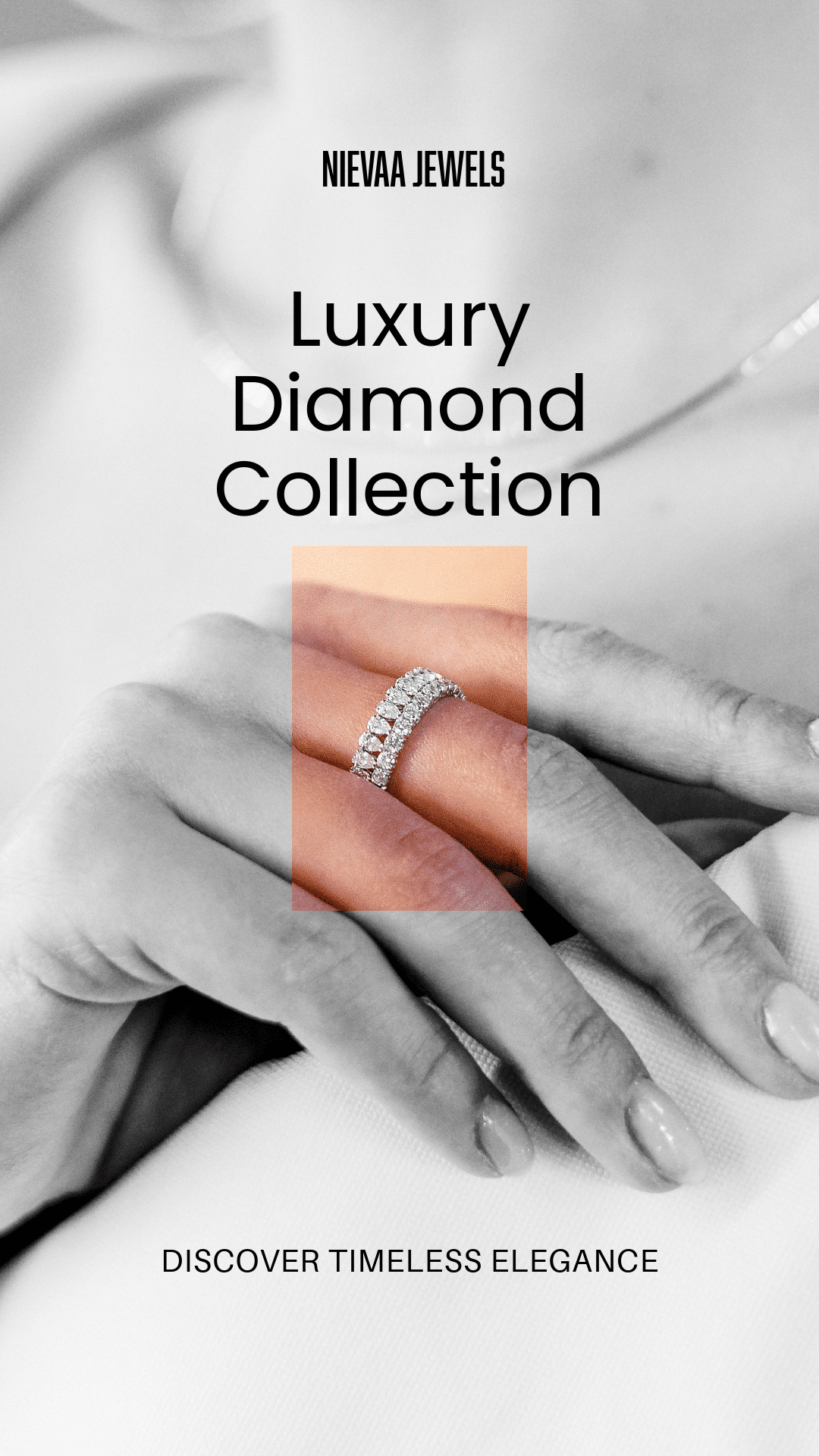
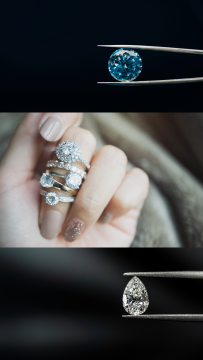
She stood in front of the mirror longer than she meant to.
Not admiring the ring. Studying it. Turning her hand slightly, watching how the light moved across the stone, trying to understand what she was actually looking at.
That question — what am I actually looking at — sits at the center of almost every diamond purchase, whether people say it out loud or not.
Buying a Diamond Shouldn’t Feel Like Guessing
Most people don’t grow up learning how diamonds are graded, certified, or made. They grow up seeing diamonds in movies, on hands at weddings, in glass counters they weren’t quite sure how to ask questions about.
So when it’s finally their turn — an engagement, an anniversary, a gift to themselves after a hard year — the excitement often comes with a quieter feeling underneath: I hope I understand what I’m choosing.
That’s the gap Nievaa Jewels was built to close.
What Nievaa Jewels Actually Is
Nievaa Jewels is a modern jewellery brand built around diamonds — both lab-grown and natural — designed for people who want their jewellery to mean something, not just sparkle for a photo.
The brand’s approach can be summed up simply: Purity. Trust. Elegance.
That’s not a slogan chosen for how it sounds. It reflects three things Nievaa Jewels treats as non-negotiable:
- Purity — in materials, in design intention, in how information is communicated
- Trust — through clear explanations of what you’re buying and why
- Elegance — through contemporary design that doesn’t rely on excess
Nievaa Jewels doesn’t try to be a mass-market jewellery marketplace with endless catalogues and no context. Every piece is meant to be understood, not just purchased.
Micro Story #1: The Question Nobody Asked Out Loud
A customer once stood at a counter holding two nearly identical rings — one lab-grown, one natural — too embarrassed to ask which was “real.”
When someone finally explained that both were genuine diamonds, chemically and physically, just formed differently, something in her shoulders relaxed.
She didn’t buy the more expensive one. She bought the one she actually understood.
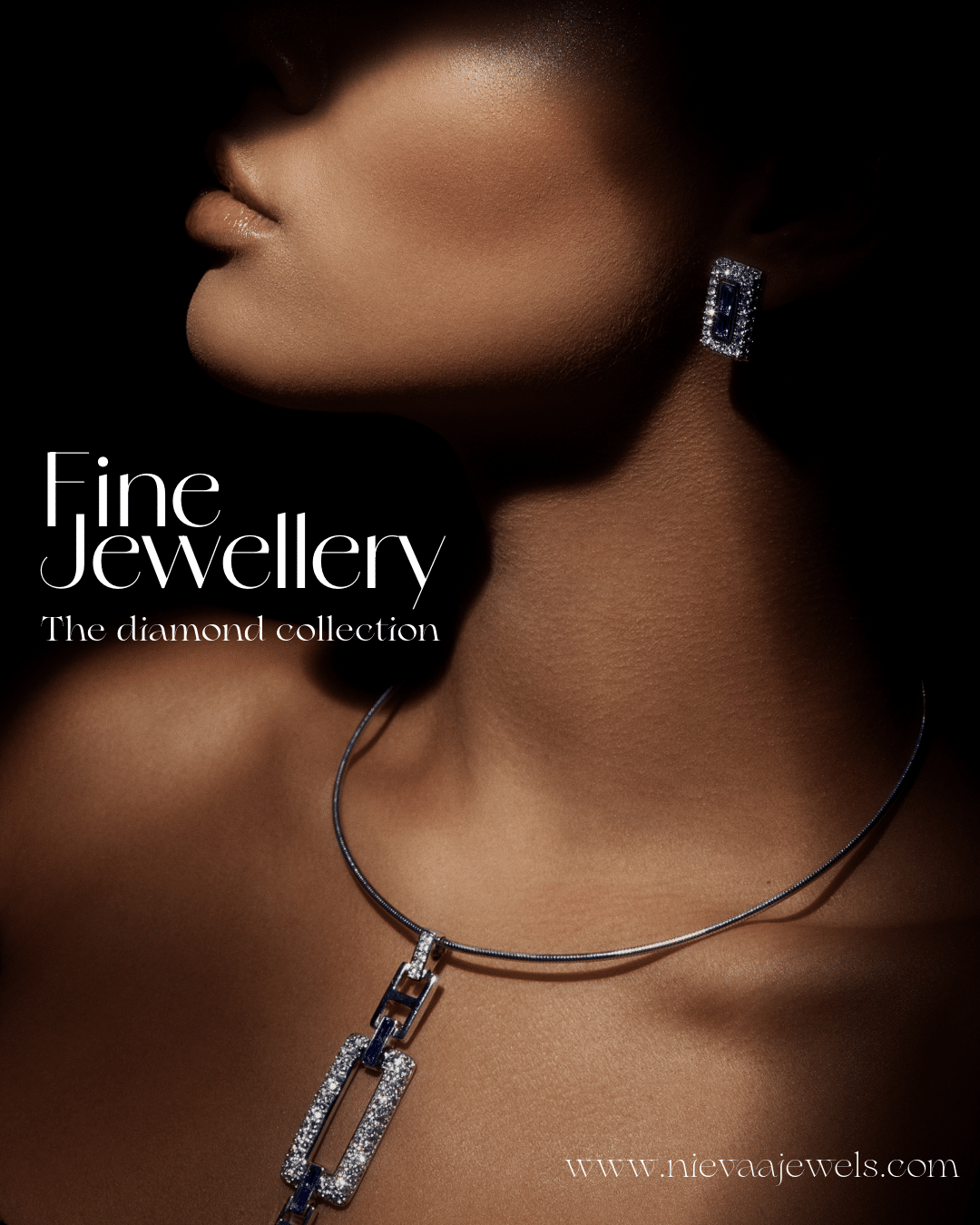
Lab-Grown Diamonds, Explained Honestl
If you’ve felt confused — or even slightly suspicious — about lab-grown diamonds, you’re not alone. It’s one of the most misunderstood categories in modern jewellery.
Here’s the part that surprises most people: lab-grown diamonds are real diamonds.
They’re not imitation stones, and they’re not the same thing as cubic zirconia or moissanite, which are diamond simulants — materials that look similar but are chemically different.
Lab-grown diamonds, including CVD (Chemical Vapor Deposition) diamonds, are grown under controlled conditions that replicate how diamonds form naturally, just on a dramatically shorter timeline. The result has the same crystal structure, the same optical brilliance, and the same physical hardness as a mined diamond.
How CVD Diamonds Are Made
In simple terms, CVD technology grows a diamond by exposing a small diamond seed to carbon-rich gas inside a controlled chamber. Layer by layer, carbon atoms bond to the seed, gradually forming a full diamond crystal.
It’s a scientific process, not a shortcut — and it’s why gemological labs grade lab-grown diamonds using the same criteria as natural ones: cut, color, clarity, and carat weight.
What Makes Them Different From Natural Diamonds
The real differences between lab-grown and natural diamonds aren’t about beauty or durability — they’re about origin and market factors:
- Origin: Natural diamonds form over billions of years underground; lab-grown diamonds form in weeks inside a controlled lab
- Availability: Lab-grown diamonds offer more consistent supply and size options
- Pricing: Lab-grown diamonds are generally more accessible at comparable carat and clarity
- Certification: Both can be certified by respected labs like IGI or GIA, though it’s worth checking which certification applies to a specific piece
- Resale perception: Natural diamonds currently have a more established resale market, though this continues to evolve
Neither option is objectively “better.” They serve different priorities, and a good jeweller should help you choose based on your priorities — not push you toward whichever costs more.
Micro Story #2: The Gift That Started With a Question
A man walked into a conversation about engagement rings assuming natural diamonds were his only “real” option.
After a genuine, unhurried conversation about how lab-grown diamonds are made and certified, he chose one — not because it was cheaper, but because he finally felt like he was making an informed choice instead of a default one.
His fiancée never asked what type of diamond it was. She just loved that he’d thought it through.
What Nievaa Jewels Actually Makes
Nievaa Jewels works across several core jewellery categories, each designed with the diamond as the visual focus rather than an afterthought.
Rings
From solitaire rings to engagement rings, available in both lab-grown and natural diamond options, with customization across metal type and design.
Earrings
Stud earrings and contemporary diamond earring designs suited to both everyday wear and special occasions.
Necklaces & Pendants
Diamond necklaces, lab-grown diamond tennis necklaces, and pendant designs that range from minimal to statement pieces.
Tennis Bracelets
Diamond and lab-grown diamond tennis bracelets, designed for continuous sparkle along the wrist rather than a single focal stone.
Custom Jewellery
For those who want something entirely their own, Nievaa Jewels supports a custom design journey — from initial concept through CAD/3D visualization to final production and finishing.
The “Less Gold, More Diamond” Philosophy
This isn’t a financial promise. It’s a design philosophy.
The idea is simple: instead of adding unnecessary metal to a piece, the design intentionally shifts visual weight toward the diamond itself — more brilliance, less bulk.
It’s a contemporary approach that suits people who want their jewellery to feel modern and diamond-forward, rather than heavy or traditional for the sake of tradition.
Pain Points + Solutions
“I don’t know how to tell if a diamond is actually good quality.”
This is one of the most common — and most valid — concerns buyers carry into any jewellery purchase.
The solution: Ask for certification. A diamond certified by a recognized lab like IGI or GIA comes with a report detailing cut, color, clarity, and carat — the “4Cs” that determine quality. This turns quality from a guess into a documented fact you can verify.
“I’m worried lab-grown diamonds are somehow ‘less real.'”
This fear is understandable, given how little mainstream education exists around lab-grown diamonds.
The solution: Lab-grown diamonds share the same chemical composition, hardness, and optical properties as natural diamonds. The difference is origin, not authenticity. Understanding this reframes the choice from “real vs fake” to “which origin fits what I value.”
“I want something personal, not something off a shelf.”
For many buyers, the fear isn’t about quality — it’s about ending up with something that doesn’t actually feel like theirs.
The solution: Custom jewellery design exists exactly for this. Starting from a concept or inspiration and moving through CAD visualization means you see the piece before it’s made — reducing the risk of a purchase that doesn’t quite feel right.
Micro Story #3: The Ring That Took Three Weeks to Decide On
A woman spent three weeks going back and forth on a custom ring design, second-guessing the stone shape, the band width, every small detail.
When she finally saw the CAD render match what she’d been picturing in her head, she said, “Oh — that’s it. That’s exactly it.”
Sometimes the right decision doesn’t feel urgent. It feels like relief.
Why This Matters to You, Personally
Jewellery carries meaning most people can’t fully explain — a ring that marks a beginning, earrings bought for no reason except that they were beautiful, a necklace passed down or chosen entirely for yourself.
Whatever the occasion, the piece deserves to be chosen with real understanding, not just excitement in the moment.
That’s the entire reason education sits at the center of how Nievaa Jewels communicates — because a customer who understands what they’re buying trusts it more, wears it more confidently, and connects with it more deeply.
How to Choose the Right Diamond Jewellery
Step 1: Decide what matters most to you. Origin, budget, size, or design — there’s no universally “correct” priority, only your own.
Step 2: Ask about certification. For any diamond purchase, ask which lab certified the stone (IGI, GIA, or otherwise) and what the report includes.
Step 3: Understand lab-grown vs natural clearly. Both are genuine diamonds. The right choice depends on your priorities around origin, budget, and personal preference — not on which one is “more real.”
Step 4: Consider custom design if off-the-shelf doesn’t feel right. If nothing you’ve seen quite matches what you’re picturing, a custom design process may be worth exploring.
Step 5: Trust pieces you understand, not just pieces that sparkle. The best purchase is the one you can explain confidently to someone else — not just admire quietly.
FAQs
1. What is Nievaa Jewels known for?
Nievaa Jewels focuses on modern diamond jewellery, offering both lab-grown and natural diamond options across rings, earrings, necklaces, bracelets, and custom designs.
2. Are lab grown diamonds real diamonds?
Yes. Lab-grown diamonds share the same chemical composition, crystal structure, and physical properties as natural diamonds. They differ in origin, not authenticity.
3. What is the difference between lab grown and natural diamonds?
The core difference is formation: natural diamonds form underground over billions of years, while lab-grown diamonds form in a controlled lab environment over a much shorter period. Pricing, availability, and resale perception also differ.
4. Does Nievaa Jewels offer certified diamonds?
Certification such as IGI or GIA is relevant to specific diamonds and pieces — always check the certification details for the exact product you’re considering
5. Can I get custom jewellery made at Nievaa Jewels?
Yes, Nievaa Jewels supports a custom jewellery design journey, moving from initial concept through CAD/3D visualization to final production.
6. What does “Less Gold, More Diamond” mean?
It’s a design philosophy where visual focus shifts toward the diamond rather than excess metal — emphasizing brilliance and contemporary design rather than implying guaranteed monetary value.
7. Is a lab-grown diamond a good choice for an engagement ring?
It can be an excellent choice for buyers who prioritize value, consistent quality, and modern design. The decision ultimately depends on personal priorities around origin and budget.
8. How do I know what quality diamond I’m buying?
Ask for the diamond’s certification report, which details cut, color, clarity, and carat — the standard measures used to evaluate diamond quality regardless of origin.
Conclusion
Every piece of jewellery holds a moment inside it — the one you were living when you chose it.
That moment deserves more than a sparkle under store lighting. It deserves understanding.
If you’ve been searching for jewellery that feels as considered as the moment it’s meant to mark, trust that feeling. Some things are worth taking the time to understand properly.


it amzing
thank you